
How Recessed Door Handles Are Different From Other Handles | Complete Guide

When planning a renovation, crafting custom cabinetry, or installing modern sliding systems, door hardware is often treated as an afterthought. Yet choosing between a recessed door handle and a traditional projecting handle fundamentally dictates how your space functions, how safe your hallways are, and whether your pocket doors can slide open at all.
- Zero Protrusion: Recessed handles sit flush (0–2mm) inside the door face, whereas lever handles stick out 65–85mm into room space.
- Pocket Door Essential: Without a flush recessed handle, a pocket door cannot fully retract into its wall cavity.
- Industry Synonyms: Commonly searched as flush pulls, inset handles, concealed pulls, pocket door handles, and mortise pulls.
- Spatial Safety: Eliminates caught belt loops, torn sleeves, and bruised hips in narrow hallways.
- Solid Wood Superiority: Handcrafted natural timber pulls (Beech, Oak, Teak, Ash) by Cohsar deliver organic warmth, zero fingerprint smudges, and whisper-quiet operation.
1. What Is a Recessed Door Handle? (And What Else Is It Called?)
Table of Contents
A recessed door handle is an architectural hardware component that is mortised (cut and embedded) directly into the face or edge of a door panel. Unlike conventional handles that mount onto the surface and project outward into the living area, a recessed handle sits flush or nearly flush with the timber face, creating an ergonomic inner cup or groove for fingers to grip.
Because interior designers, hardware distributors, and homeowners across the globe describe this hardware differently, you will often find recessed door handles referred to by several other trade names:
- Flush Pull Handles: The universal commercial term highlighting that the faceplate sits perfectly level (flush) with the door surface.
- Pocket Door Pulls: Named after their indispensable role in allowing pocket doors to slide 100% inside wall cavities without obstruction.
- Inset / Mortise Pulls: Referenced by carpenters because installing them requires routing out a mortise pocket in the timber.
- Concealed Door Pulls: Emphasizing the seamless, uncluttered visual appeal favored in minimalist architecture.
- Sliding Door Edge Pulls: Narrow pulls installed on the vertical leading edge of a pocket door to pull it out from the wall pocket.
2. How Recessed Handles Differ from Standard Handles (Head-to-Head)
To understand why recessed handles have become an architectural staple, let’s examine how they fundamentally contrast with traditional door hardware (such as lever latch sets, round doorknobs, and surface-mounted bar pulls):
A. Room Projection (The Zero-Profile Advantage)
The most prominent contrast lies in projection distance. Standard lever handles project 65mm to 85mm (2.5 to 3.4 inches) outward from the door surface. Doorknobs protrude 50mm to 70mm. A recessed handle, by contrast, has a net projection of 0mm to 2mm. It occupies the internal volume of the door slab rather than the open airspace of your room or hallway.
B. Operating Mechanism: Lateral Slide vs. Rotational Latch
Standard door handles are designed for hinged swinging doors that require a mechanical spring-loaded latch bolt to stay shut. You must push down on a lever or turn a knob to retract the latch before swinging the door open. Recessed handles operate primarily via lateral shear force. Your fingertips rest within a precision-machined inner cup or beveled lip, allowing you to glide the door horizontally along a track or pull it open with zero mechanical twisting required.
C. Mechanical Longevity & Silence
Traditional handles rely on delicate internal springs, cams, and spindles that suffer wear, metal fatigue, and rust. A solid wood recessed handle has zero moving parts. There are no internal springs to fail, no clanking metallic latches, and no loose set screws. It provides whisper-quiet operation that lasts the lifetime of your door.
D. Spatial Safety in Narrow Corridors
In high-traffic hallways, children’s bedrooms, and compact apartments, protruding lever handles are notorious hazards. They catch jacket pockets, snag headphone cables, tear belt loops, and pose a head-height collision danger to toddlers running down the hall. Recessed handles completely eliminate collision points.
3. The Clearance Dilemma: Pocket Doors & Wall Collisions
Why are recessed handles non-negotiable for sliding and pocket door systems? When a standard lever handle is installed on a sliding pocket door, the handle collides violently with the wall jamb. This limits the door to opening only 70% to 75% of its travel, effectively narrowing your entryway by up to 10 inches, while chipping door trim and gouging drywall.
A Cohsar recessed flush pull sits completely within the door leaf. The door slides effortlessly 100% into the pocket cavity, providing full, unobstructed walk-through clearance.
4. Product Spotlight: Cohsar Chamfered Solid Wood Flush Pull
Below is a direct showcase of Cohsar’s solid beechwood recessed flush handle: comparing the raw handcrafted timber billet alongside its finished flush installation on an interior sliding door:
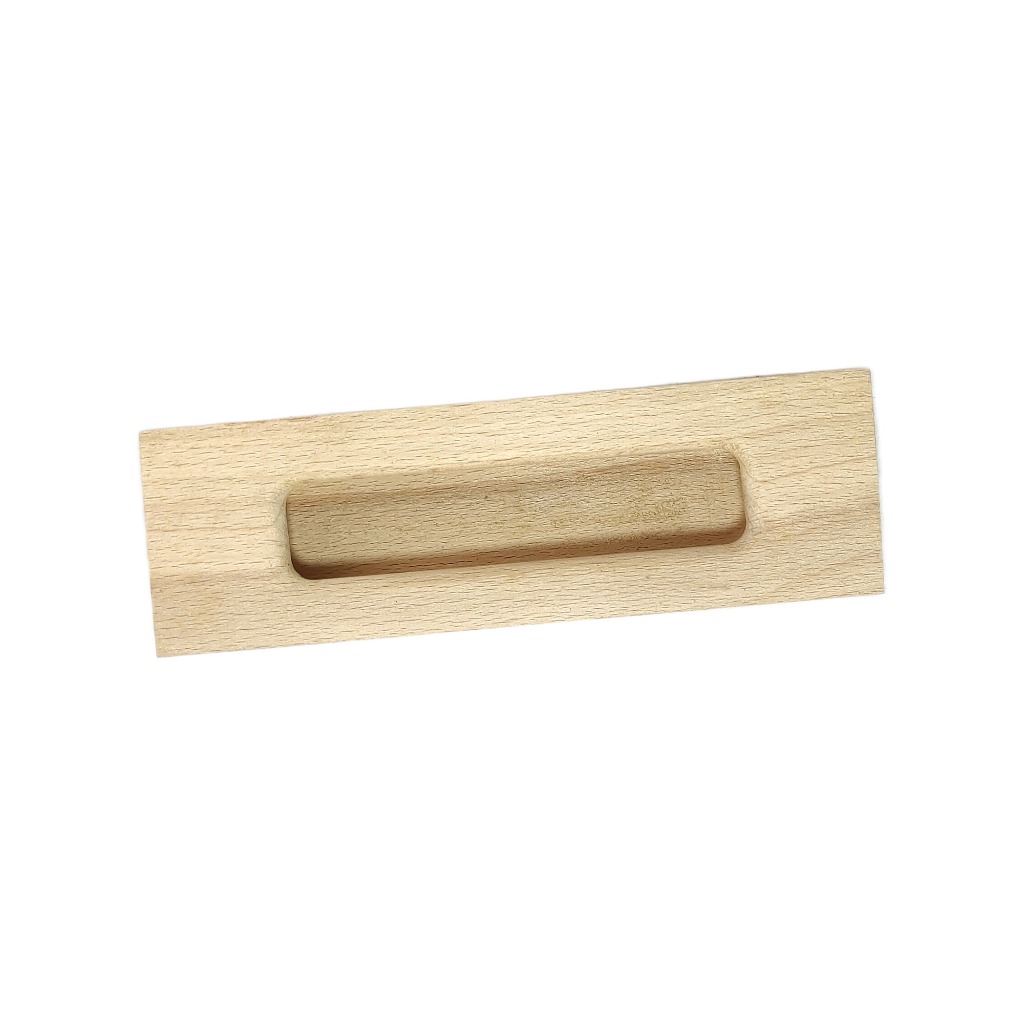
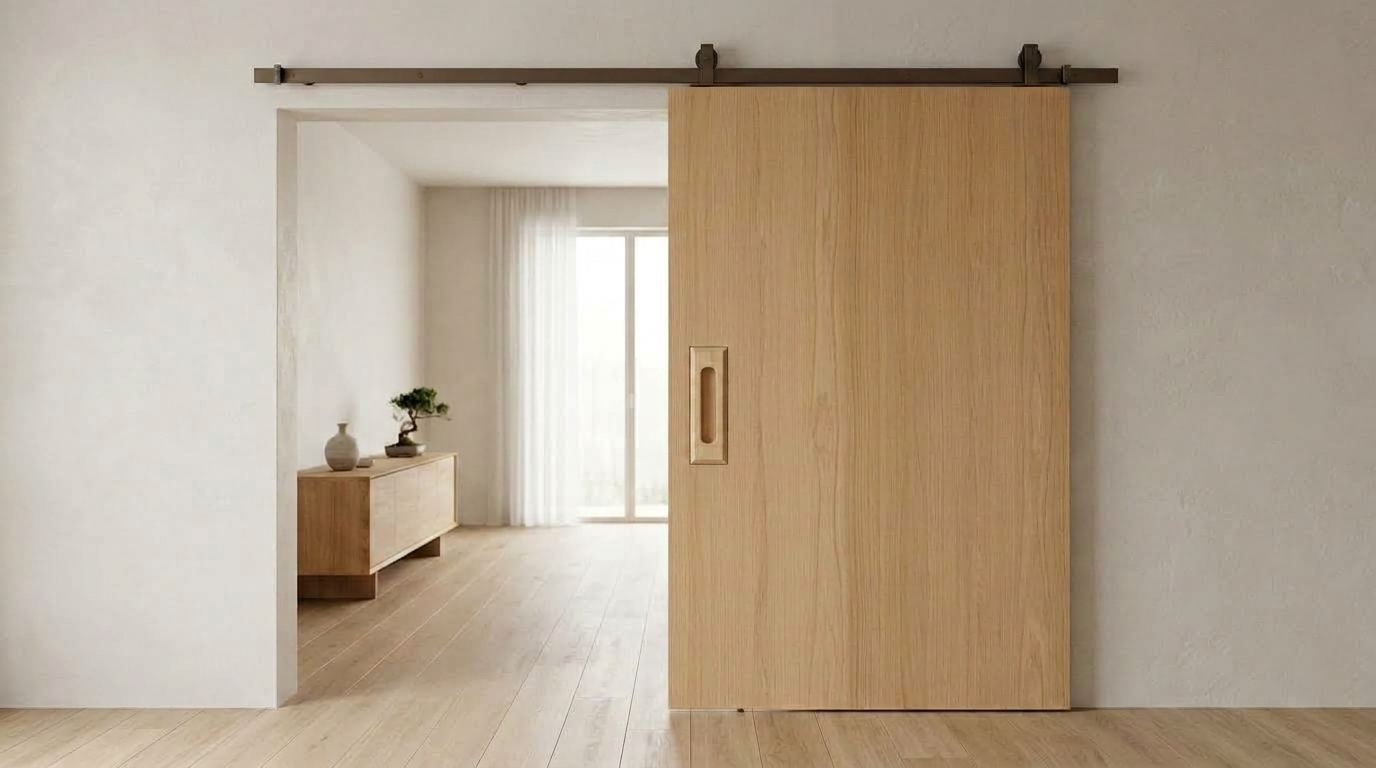
1. Solid Beechwood Billet
Hand-carved from single billets of kiln-dried solid beechwood. Precision-routed center finger pocket (12mm–15mm depth) with beveled perimeter facets that catch natural ambient daylight.
2. Seamless Sliding Door Mortise
Precision-mortised flush into the door leaf. Enables full-width door retraction with zero contact against split jambs or adjoining wall casings.
5. Where & Why Recessed Door Handles Are Used
While pocket doors represent their most famous application, recessed handles have expanded into virtually every discipline of luxury interior design:
- Bypass Sliding Wardrobes: When closet doors slide past one another on parallel tracks, projecting knobs scratch the adjoining panel. Recessed pulls allow bypass panels to glide past with mere millimeters of clearance.
- Sliding Barn & Room Divider Doors: Flush pulls installed on the wall-facing side ensure the door glides close to the wall without scuffing drywall or baseboards.
- Luxury Yachts & RVs: Eliminating projecting metal corners protects passengers in moving living quarters.
- Minimalist & Japandi Interiors: Preserves unbroken natural wood grain across walls with hidden flush doors.
6. Natural Wood vs. Cold Metal: The Luxury Architectural Shift
Historically, hardware suppliers offered recessed pulls almost exclusively in stamped stainless steel or zinc. However, metal carries significant drawbacks:
- Thermal Shock: Feels icy cold in winter and clammy in humidity.
- Fingerprint Magnets: Polished or brushed steel immediately shows oily fingerprints and smudges.
- Sharp Edge Discomfort: Stamped metal cups often have razor-thin edges that dig into fingertips.
This is why leading interior designers are choosing handcrafted solid wood recessed handles, such as those created by Cohsar. Milled from premium hardwoods like Beech, Oak, Ash, Acacia, and Teak, solid wood handles provide:
- Organic Warmth: Inviting ambient touch temperature year-round.
- Zero Fingerprint Smudges: Natural satin finishes disperse skin oils invisibly.
- Deep Ergonomic Finger Relief: Silky smooth, hand-carved beveled finger cups that distribute weight comfortably.
- Acoustic Dampening: Eliminates hollow metallic echoes.
7. Direct Comparison Table: Recessed vs. Levers vs. Knobs
| Architectural Metric | Recessed / Flush Pull | Lever Latch Set | Traditional Doorknob |
|---|---|---|---|
| Room Projection | 0mm – 2mm (Flush) | 65mm – 85mm (High) | 50mm – 70mm |
| Pocket Door Compatibility | 100% Essential | Incompatible (Blocks slide) | Incompatible |
| Bypass Door Clearance | Yes (Glides past) | No (Collides & binds) | No (Scratches panels) |
| Child & Corridor Safety | High (Zero snag) | Low (Sharp strike hazard) | Medium |
| Mechanical Reliability | Zero moving parts | Springs & latches wear | Spindle & spring wear |
| Acoustic Profile | Whisper-quiet glide | Metallic click & snap | Rattling springs |
8. Frequently Asked Questions (FAQ)
What is the primary difference between a recessed door handle and a standard handle?
The primary difference is physical protrusion. Standard lever handles and doorknobs protrude 65mm to 85mm outward, whereas recessed door handles are mortised inside the door surface, sitting flush (0mm to 2mm). This allows sliding doors to retract fully into wall pockets without catching on door jambs.
What else are recessed door handles called?
They are widely known as flush pulls, flush door handles, inset pulls, pocket door handles, concealed pulls, mortise cups, and sliding door edge pulls.
Can I install a recessed handle on a regular hinged swing door?
Yes. Designers frequently pair recessed pulls with magnetic touch-latches or roller catches on hinged doors to achieve an ultra-minimalist, handle-free wall appearance.
Why choose solid wood recessed handles over metal?
Handcrafted solid natural wood handles (crafted in Beech, Oak, Teak, Ash by Cohsar) provide warmth, never show smudged fingerprints, and operate with acoustic silence.
How deep does a door need to be for a recessed handle?
Standard recessed pulls require a mortise depth of 11mm to 16mm. A standard interior door thickness of 35mm (1-3/8″) to 45mm (1-3/4″) easily accommodates recessed pulls while maintaining structural rigidity.